

Introduction
Sodiceram is quickly becoming a buzzword among architects, engineers, designers, and homeowners looking for stronger, smarter, and more durable materials. While traditional ceramics have served industries for centuries, sodiceram represents a new generation of advanced ceramic technology designed to overcome many common limitations of conventional materials. Its combination of strength, heat resistance, low maintenance requirements, and aesthetic flexibility has attracted growing interest across multiple sectors.
For anyone searching for information about sodicram, the simple answer is that it is an engineered ceramic material enhanced with sodium-based compounds that improve durability, density, and performance. From modern homes to industrial facilities and emerging energy technologies, sodicram is increasingly viewed as a material that bridges the gap between beauty and functionality. Understanding how it works and where it excels can help consumers and professionals make better decisions when selecting materials for long-term projects.
What Is Sodiceram and Why Is It Gaining Attention?
Sodiceram refers to a category of advanced ceramic materials that incorporate sodium-enhanced compounds into traditional ceramic formulations. This engineering process creates a denser structure with improved mechanical strength, reduced porosity, and greater resistance to environmental stress. Unlike standard ceramics, sodicram is designed to perform in demanding applications where durability and consistency are critical.
Its popularity is increasing because modern industries require materials that can withstand heavy use while maintaining visual appeal. Builders want surfaces that resist moisture and wear. Engineers need materials capable of handling heat and chemicals. Designers seek options that combine performance with aesthetics. Sodiceram meets many of these needs simultaneously, making it attractive for a wide variety of applications.
The Science Behind Sodiceram
The foundation of sodiceram lies in advanced ceramic engineering. Manufacturers combine traditional ceramic ingredients such as clay, silica, and alumina with sodium-based compounds. During the firing process, sodium acts as a flux that helps materials bond more efficiently and form a denser crystalline structure. This process reduces internal voids and improves the final material’s strength and stability.
The result is a ceramic material that behaves differently from conventional ceramic products. Improved densification contributes to lower water absorption, better resistance to cracking, and enhanced thermal performance. Because the chemical composition can be adjusted for specific applications, manufacturers can tailor sodicram to meet the requirements of construction, electronics, industrial manufacturing, and emerging technologies.
Key Properties That Make Sodiceram Unique
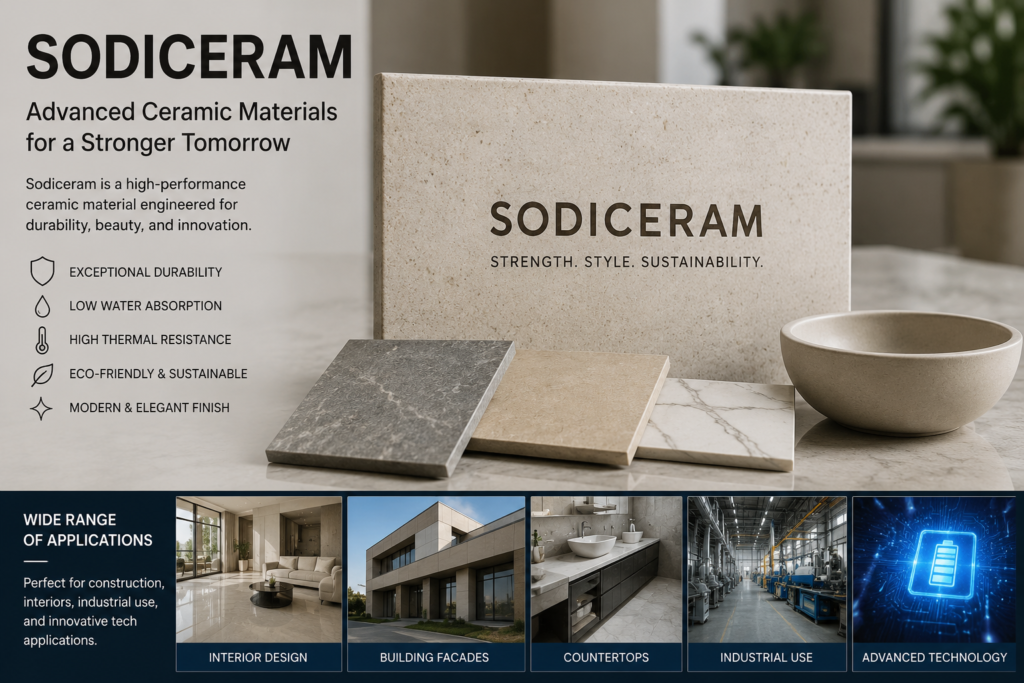
One of the defining characteristics of sodiceram is its exceptional durability. The material demonstrates strong resistance to impact, wear, and daily stress, making it suitable for high-traffic environments. Its dense composition helps prevent damage that might affect more traditional ceramic products over time.
Another important property is thermal stability. Sodicram can tolerate significant temperature fluctuations without warping or cracking. In addition, its low porosity reduces moisture absorption, helping prevent stains, mold growth, and freeze-thaw damage. These characteristics make it particularly attractive for both indoor and outdoor installations.
Major Applications of Sodiceram in Modern Industries
The versatility of sodiceram allows it to serve a wide range of industries. In manufacturing environments, it is used for components that must withstand high temperatures, corrosive chemicals, and constant mechanical stress. Its durability makes it valuable for industrial processing equipment and specialized machinery.
Researchers are also exploring sodicram’s role in advanced battery technologies and electronic systems. Certain formulations exhibit useful electrical properties that may support future energy storage solutions and electronic components. As technology continues to evolve, these applications could become increasingly significant.
Sodiceram in Construction and Interior Design
The construction industry has embraced sodiceram because it combines structural performance with design flexibility. Flooring, wall panels, facades, countertops, and decorative surfaces all benefit from its durability and low maintenance requirements. Homeowners appreciate materials that maintain their appearance despite years of use.
Designers are equally attracted to the material’s aesthetic versatility. Modern manufacturing techniques allow sodicram surfaces to mimic natural stone, wood, marble, and other premium materials. This flexibility enables designers to achieve sophisticated visual effects without sacrificing durability or practicality.
Advantages of Choosing Sodiceram
One of the greatest advantages of sodiceram is longevity. Projects built with durable materials often experience lower maintenance costs and longer service lives. This can translate into significant savings for property owners, businesses, and institutions over time.
Another major benefit is resistance to environmental challenges. Sodicram performs well in humid conditions, under direct sunlight, and in areas exposed to chemical substances. Its ability to maintain structural integrity under demanding conditions makes it an appealing choice for projects that prioritize reliability and performance.
Potential Limitations and Considerations
Despite its many strengths, sodiceram is not always the ideal solution for every project. Advanced manufacturing processes can increase production costs, resulting in a higher initial investment compared to traditional ceramic materials. Budget-conscious buyers should evaluate long-term value rather than focusing solely on upfront expenses.
Another consideration is proper specification and installation. Different formulations may be optimized for different uses, and selecting the wrong grade can reduce performance. Consulting technical documentation and industry professionals helps ensure that the chosen material matches the intended application.
How to Choose the Right Sodiceram Solution
Selecting the best sodicram product begins with understanding project requirements. Factors such as expected traffic levels, exposure to moisture, temperature conditions, and aesthetic goals should all influence material selection. A residential flooring project may require different characteristics than an industrial installation.
Reviewing technical specifications is equally important. Density, porosity, thermal resistance, and chemical compatibility all contribute to long-term performance. By carefully matching product characteristics with real-world requirements, users can maximize the benefits of sodiceram while minimizing potential risks.
Sustainability and Environmental Benefits
Sustainability has become a major consideration in modern construction and manufacturing. Many sodicram production processes emphasize energy efficiency, reduced waste, and responsible resource management. These practices align with growing demand for environmentally conscious materials.
Perhaps the greatest environmental advantage is longevity. Materials that last longer require fewer replacements, reducing resource consumption over time. By extending service life and lowering maintenance demands, sodiceram contributes to more sustainable building and manufacturing practices.
The Future of Sodiceram Technology
The future of sodiceram appears promising as research continues to uncover new applications and manufacturing improvements. Advances in material science may further enhance mechanical performance, thermal stability, and electrical characteristics. These improvements could expand the material’s role in high-tech industries.
Emerging sectors such as renewable energy, smart infrastructure, and advanced electronics may create additional demand. As production techniques become more refined and cost-effective, sodicram could become increasingly accessible to both commercial and residential markets.
Conclusion
Sodiceram represents an important advancement in ceramic technology. By combining traditional ceramic foundations with sodium-enhanced engineering, it delivers improved durability, thermal resistance, low porosity, and design flexibility. These characteristics make it suitable for applications ranging from home interiors to industrial manufacturing and advanced technology development.
As demand grows for materials that balance performance, sustainability, and visual appeal, sodiceram is positioned to play an increasingly important role. Whether you are a homeowner, designer, architect, or engineer, understanding the capabilities of sodiceram can help you make smarter, future-focused material choices.
FAQs
What is sodiceram in simple terms?
Sodiceram is an advanced ceramic material enhanced with sodium-based compounds to improve strength, density, heat resistance, and durability. It is designed to outperform many traditional ceramic products while maintaining attractive visual qualities. Because of these improvements, sodiceram is used in construction, industrial manufacturing, and specialized technology applications. Its ability to resist moisture, wear, and environmental stress makes it valuable for both residential and commercial projects.
What are the main benefits of sodiceram?
The primary benefits include high durability, low water absorption, strong thermal resistance, chemical stability, and design flexibility. These characteristics allow sodiceram to perform effectively in demanding environments while maintaining an attractive appearance. Many users appreciate its low maintenance requirements and long service life.
Is sodiceram suitable for outdoor use?
Yes, many grades of sodiceram are designed for outdoor applications. Its resistance to UV exposure, moisture, freeze-thaw cycles, and temperature fluctuations makes it a practical option for facades, patios, walkways, and exterior surfaces. Proper product selection remains important to ensure optimal performance.
How does sodiceram differ from traditional ceramics?
Traditional ceramics can be durable, but they often have higher porosity and lower resistance to certain environmental conditions. Sodiceram uses engineered formulations that improve density, strength, and overall performance. These enhancements help reduce moisture absorption, increase durability, and improve long-term reliability.
Is sodiceram environmentally friendly?
Many manufacturers focus on energy-efficient production methods and sustainable practices. Additionally, the material’s long lifespan reduces the need for frequent replacement, lowering overall resource consumption. These factors contribute to a more sustainable lifecycle compared to some alternative materials.
What industries use sodiceram?
Sodiceram is used across construction, architecture, interior design, industrial manufacturing, electronics, battery technology, aerospace, and specialized engineering fields. Its versatility allows it to meet the demands of many different applications.
Read More About: blogcrafters.co.uk